



 |
 |
 |
 |
 |
 |
 |
 |

 |
|



|
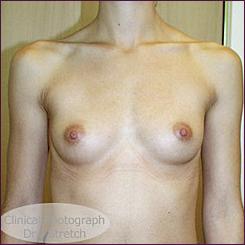
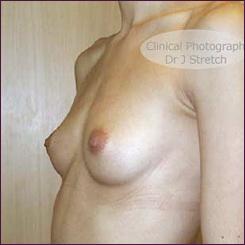
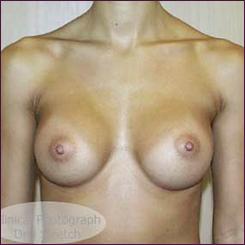
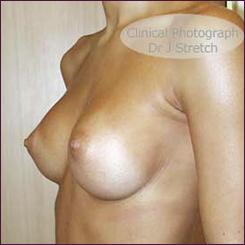
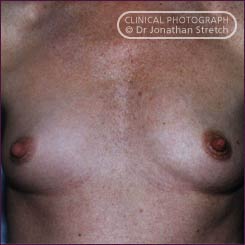
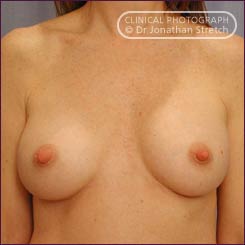
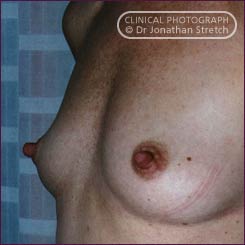
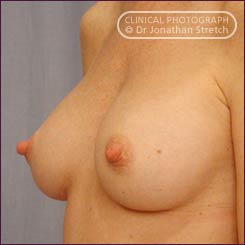
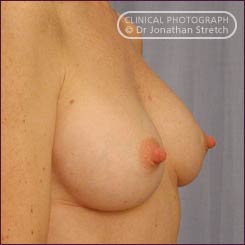
Breast augmentation with prostheses (implants) is a procedure associated with very high levels of patient satisfaction. It is however important for patients to understand that some degree of capsule (internal scar formation around the implants) can occur in between 5-8% of patients. Newer techniques and prostheses may reduce this rate of capsule formation. It is also important to understand that lesser degrees of capsule formation may not significantly detract from patients satisfaction with the result and not warrant treatment.
|
||||||||||||||||||||||||||||||||||||||||
Frequently Asked Questions about Breast Augmentation
How do I work out what size I want to be? Patients talk in cup sizes and surgeons talk in cubic centimetres (cc's). In my practice we encourage women to bring in photographs which indicate the look they are seeking. An excellent way to indicate the desired size is for the patient to purchase a structured bra (such as the Berlei Sports Bra) which when worn supplemented with tissues/stockings or the like under a T-shirt produces the desired bust. It is then possible to estimate the difference between the patients current breast volume and that required to fill the bra cup.
How do I get maximum cleavage? Cleavage is a creation of clothing, particularly bras. Unsupported breasts don't have cleavage as the breasts normally drape down and out. Maximal cleavage in a bra requires a larger implant but this may also produce significant outer fullness and indeed a generally heavier bust.
Saline, gel and cohesive gel filled implants — please explain? All implants have essentially the same fully polymerized silicone shell which makes up the outer casing of the implant. The basic difference is the filler inside (saline or silicone gel). The filler inside will not come into contact with your body unless the implant shell is disrupted. If the shell of a saline implant is disrupted the body will recycle the salt and water harmlessly and the breast will deflate over a period of time. Gel implants will not deflate but may become misshapen if the shell is disrupted. Newer cohesive gel implants should get over the problem of gel bleed and extensive extravasation of gel into the breast. |
||||||||||||||||||||||||||||||||||||||||
|
Saline vs. gel implants — what do you recommend? The availability of new generation cohesive gel prostheses has resulted in these implants becoming my recommendation. These devices have substantially stronger shells and contain gel which has chemically engineered to resist migration beyond the implant.
Should implants be placed under the muscle or under the breast? This depends on the patient's build, how much breast they have and the degree of breast drooping (or ptosis) they demonstrate. Implants placed under the breast (and in front of the pectoral muscle) have less padding over them and so are more likely to be visible particularly in the upper part of the breast. If the patient has an adequate amount of padding in the upper chest measured by the pinch test (at least 2 cm of tissue between the fingers at a gentle pinch) then submammary implants can be considered.
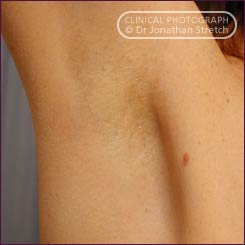
Do you recommend the teardrop (so called anatomic) shaped implants for cosmetic breast augmentation? In selected cases, particularly when the nipple and areola have dropped to a lower position on the breast, anatomic shaped prostheses have substantial advantages and can provide a better rejuvenation of the breast. Women who do not demonstrate any breast sag (ptosis) may achieve an optimal result with round prostheses inserted through skin crease incisions in the arm pits. The cost difference (anatomic prostheses are approximately $1,000 more expensive) between the two types of prostheses is also a factor which needs to be considered.
How long will breast implants last? All manufactured implantable medical devices should be considered to have a finite service life. This applies to prosthetic joint replacements, heart valves, pacemakers etc. Breast implants can be expected to have a reliable service life of at least 10 years, although many will continue to perform well for much longer.
Implants may need to be replaced because the shell degrades over time or the valves in saline filled devices may leak. In addition, the patient's own breast may change with age, weight fluctuations or pregnancy so that the overall shape of the breast becomes less satisfactory and revision is sought. Failure of the implant shell can be checked by ultrasound, mammogram, CT scan or MRI. |
||||||||||||||||||||||||||||||||||||||||
|
What is capsular contracture? This is when an implant hardens and feels firm. It varies in degree form a little to a lot. This is the result of your body's reaction to the implant. Gradually the body lays down a coating of scar tissue over the implant mainly made up of collagen. If this capsule of scar tissue thickens and tightens the implant becomes more rounded and it also starts to feel firmer. Mild degrees may not worry a patient who is happy with their bust line and accepts this as a compromise outcome. Harder breasts tend to sit upright even without a bra, again some patients will tolerate this and on occasions leave the implants in place despite having the option of revisionary surgery.
Wiill my implants go hard? This may never occur or it may occur in as little as a few months. This is one of the real pitfalls of this surgery. Surgeons cannot predict what degree of capsule formation or contraction will occur in any given patient.
Are there any limitations after surgery? Yes. You are asked not to participate in high impact aerobics or heavy contact sport for about four weeks. Mostly patients are allowed to do whatever they wish using their discomfort as a guide (if it doesn't hurt you can probably do it, but seek advice if unsure).
When can I go back to work? The key here is the type of work you do. In general if you sit at a desk and supervise people then most people would return to work in less than a week. If your job involves heavy lifting then 2 or even 3 weeks may be required. The limiting factor seems to be pain in the pectoral muscles and these hurt when you lift your arms and move your shoulders.
How often after the operation do I see the doctor? Every week for 3 or 4 weeks then again 3 months later. In the long term, yearly visits for a quick check are recommended.
Do breast implants interfere with mammograms? To a degree, yes. Because X-rays don't pass through implants they can get in the way of a complete X-ray of all sectors of the breast. Radiologists will tell you that their X-ray techniques can be modified so that this shadowing effect is minimized. In addition the breast can still be imaged completely with ultrasound or an MRI scan. The overall impact of implants on mammograms also depends on how much of the breast is implant and how much is your breast. While these considerations are not serious enough to dissuade many young women from having implants they may force an older woman in the mammogram age group with a history of breast lumps to think carefully about the procedure.
Do silicone implants cause cancer? The
evidence available says no. See the following sites as starting
points
Do silicone implants cause any other diseases? The
evidence available says no. See the following site as starting points,
http://www.pbs.org/wgbh/pages/frontline/implants/cron.html
What about breast feeding? Again the balance of evidence suggests no problems.
Other sites to visit An annotated chronology of the silicone controversy McGahn Corporation major US implant manufacturer Mentor Corporation major US implant manufacturer
This FAQ on breast augmentation is based on the efforts of my colleague Dr Peter Hayward. His contribution and permission to utilize the material is gratefully acknowledged.
|
||||||||||||||||||||||||||||||||||||||||
| Further information about breast augmentation can be found at the Australian Society of Plastic Surgeons. | ||||||||||||||||||||||||||||||||||||||||
|
Jonathan
Stretch Plastic Surgeon D.Phil (Oxon) F.R.A.C.S.
|
||||||||||||||||||||||||||||||||||||||||